

Every Saturday morning for about two years, I did the same dumb thing. I'd start in the kitchen with the all-purpose spray, remember I needed glass cleaner for the sliding door, walk to the laundry room to grab it, remember the toilet bowl brush was still upstairs from last week, and by the time I'd gathered everything I needed for a full clean of our house in Round Rock, I'd already burned twenty minutes just walking in circles. My cleaning supplies lived in three different spots: under the kitchen sink, a shelf in the laundry room, and a shoebox in the hall closet that my husband kept calling 'the junk box' because half of it was expired dryer sheets and one lonely can of furniture polish nobody remembered buying.
The fix wasn't a bigger cabinet or a Pinterest-worthy pantry wall. I don't have the closet space for that, and honestly, most of us don't. The fix was consolidating everything into one portable caddy I could carry room to room, so I only ever had to gather my supplies once. I ended up landing on a JiatuA cleaning caddy after my old dollar-store bucket cracked at the handle mid-carry, and the divided tray turned out to matter more than I expected. Below is the exact five-step system I use now, built around that switch. This isn't a theory I read somewhere. I've run it every weekend since last spring, and it's the reason my Saturday cleaning routine now takes closer to forty minutes instead of well over an hour.
Stop hunting for cleaning supplies room by room
The caddy I switched to holds everything from spray bottles to scrub brushes in one trip, with a divided tray that actually keeps things upright. Check today's price and see if it fits your cabinet.
Amazon Check Today's Price on Amazon →Step 1: Pull everything out and put it in one pile
This step feels backwards because it makes your kitchen counter look like a chemical spill for about twenty minutes, but you cannot organize what you cannot see, and you definitely cannot organize what's spread across three rooms of your house. I gathered every bottle, rag, brush, and pod from under both sinks, the laundry shelf, and that infamous shoebox, and lined it all up on the counter in rows. I counted eleven half-used bottles of glass cleaner. Eleven. I'd been buying a new one every time I couldn't find the old one, which was basically every single week.
Do this on a day you have thirty uninterrupted minutes, not while dinner is on the stove. I learned that one the hard way when my Swiffer solution tipped over into a pot of marinara sauce and I had to start dinner over from scratch. Lay everything flat where you can actually read the labels, not stacked in a bin where the bottom layer disappears for another six months. If you have kids in the house, this is also a good moment to double check that nothing corrosive has been sitting within reach of small hands, which was true for two of my bottles that I'd genuinely forgotten I owned.
While everything is out, take a photo of the full pile before you sort it. It sounds silly, but seeing exactly how much you've accumulated is what motivates you to actually follow through on step two instead of shrugging and putting it all back the way it was. My photo became the thing I texted my sister when she asked why I was suddenly obsessed with a plastic bucket.
Step 2: Purge the duplicates and the dead weight
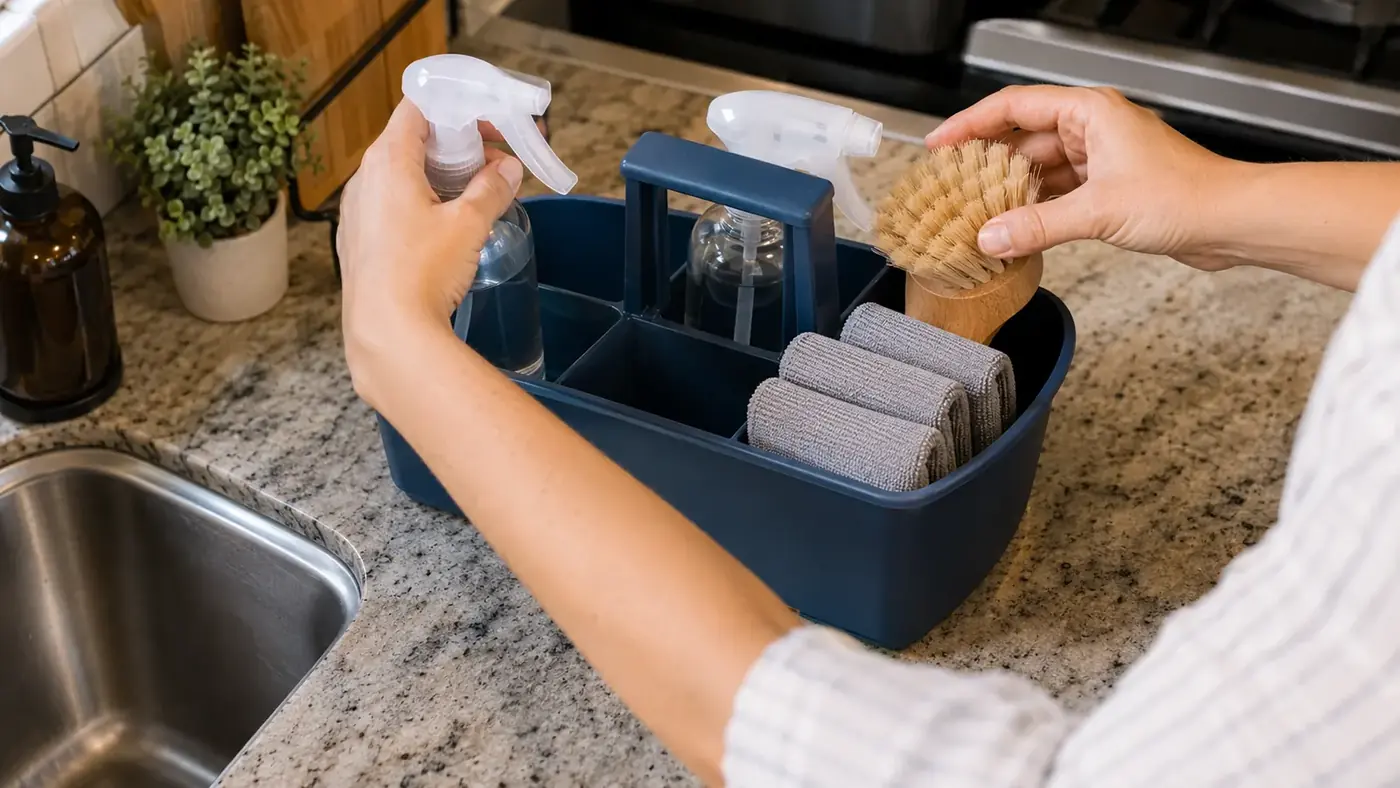
Anything expired, dried out, or duplicated past two bottles goes. I kept exactly two of each core product: one all-purpose cleaner, one glass cleaner, one bathroom-specific spray, and one wood polish. Everything else got tossed or, if it was still sealed, boxed up for our church's donation drive rather than thrown straight in the trash. Most cleaning sprays are safe to keep a year or two past printing, but if the nozzle is clogged or the smell has gone strange, it's not worth the shelf space.
This step usually cuts your total supply count by a third. Mine went from around thirty items to nineteen. Fewer items means the JiatuA caddy actually closes without you sitting on the lid, which was a real recurring problem with my old plastic bin from Walmart. I also tossed three separate 'specialty' cleaners I'd bought for one-time jobs, like a stainless steel polish I used exactly once in 2023, and replaced the whole category with a single multi-surface spray that does the job well enough for daily use.
Be honest with yourself about what you actually reach for. I kept a small notepad on the counter during this step and jotted down which products I genuinely used weekly versus which ones were aspirational purchases from a decluttering binge two years back. The aspirational ones almost never made the cut, and letting them go is what freed up enough room for the JiatuA caddy to hold everything else.
Step 3: Group by task, not by room
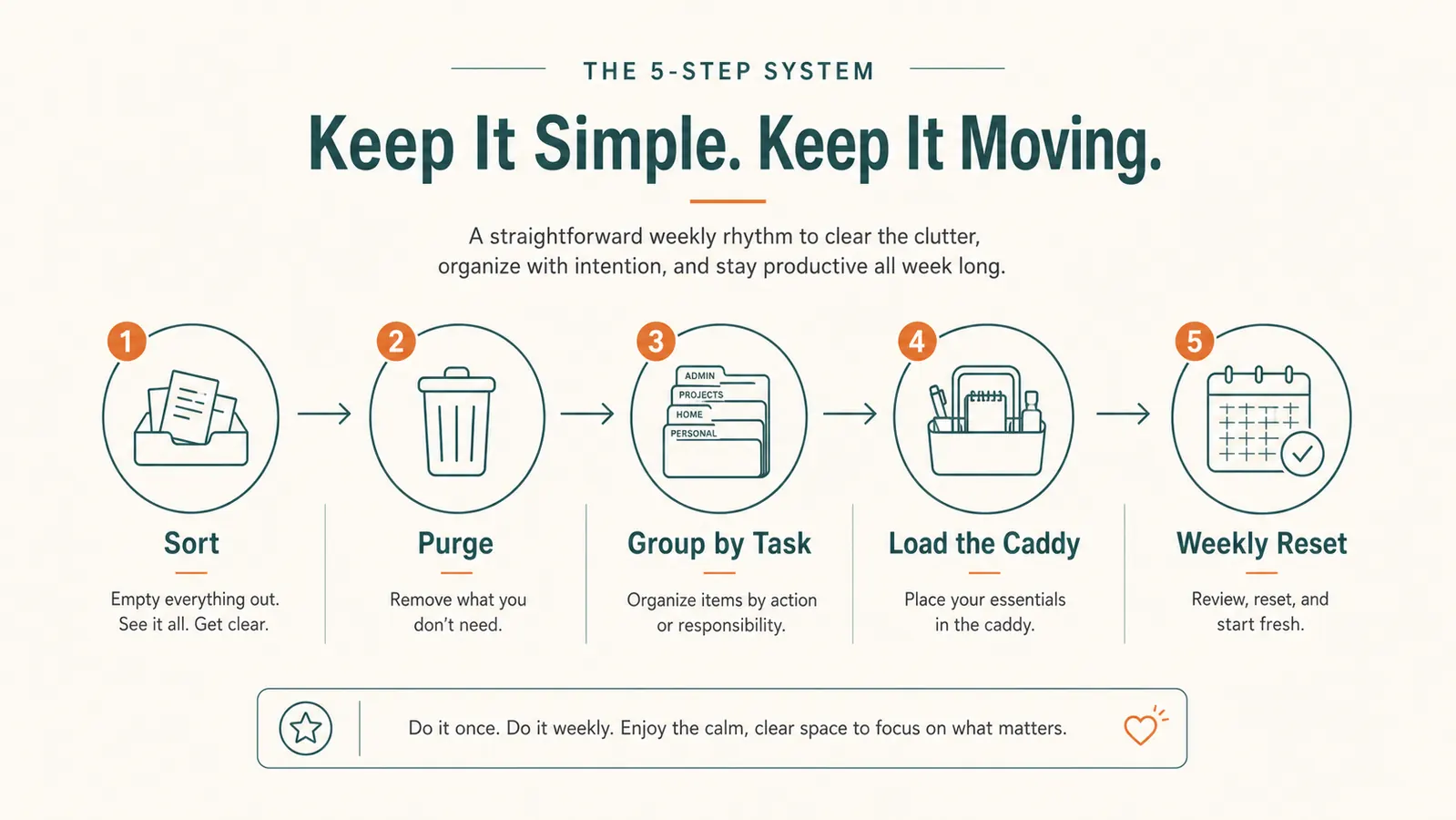
This is the part most people skip, and it's the part that actually matters. Instead of thinking 'kitchen stuff' and 'bathroom stuff,' I grouped by what I'm doing: wiping surfaces, scrubbing, disinfecting, and polishing. The all-purpose spray, microfiber cloths, and glass cleaner go in the wiping group. The scrub brush, bathroom spray, and grout brush go in the scrubbing group. Disinfecting wipes and a small spray bottle of diluted bleach solution make up the third group.
Grouping by task means the same caddy works whether I'm cleaning the kitchen, the bathroom, or my son's room after a fort-building phase gone wrong. I'm not repacking supplies for each room, I'm just carrying the whole caddy and grabbing what I need from whichever group applies. Before I made this switch, I had a separate mini kit for each bathroom, which meant three bottles of the exact same spray sitting in three different cabinets, mostly empty, mostly forgotten.
If your household has a specific recurring job, like pet messes or a kid who tracks mud through the mudroom, give that its own small group inside the caddy too. Mine has a dedicated pocket for enzyme cleaner because our dog Biscuit has never once respected the concept of a doormat.
Step 4: Load the caddy with weight and reach in mind
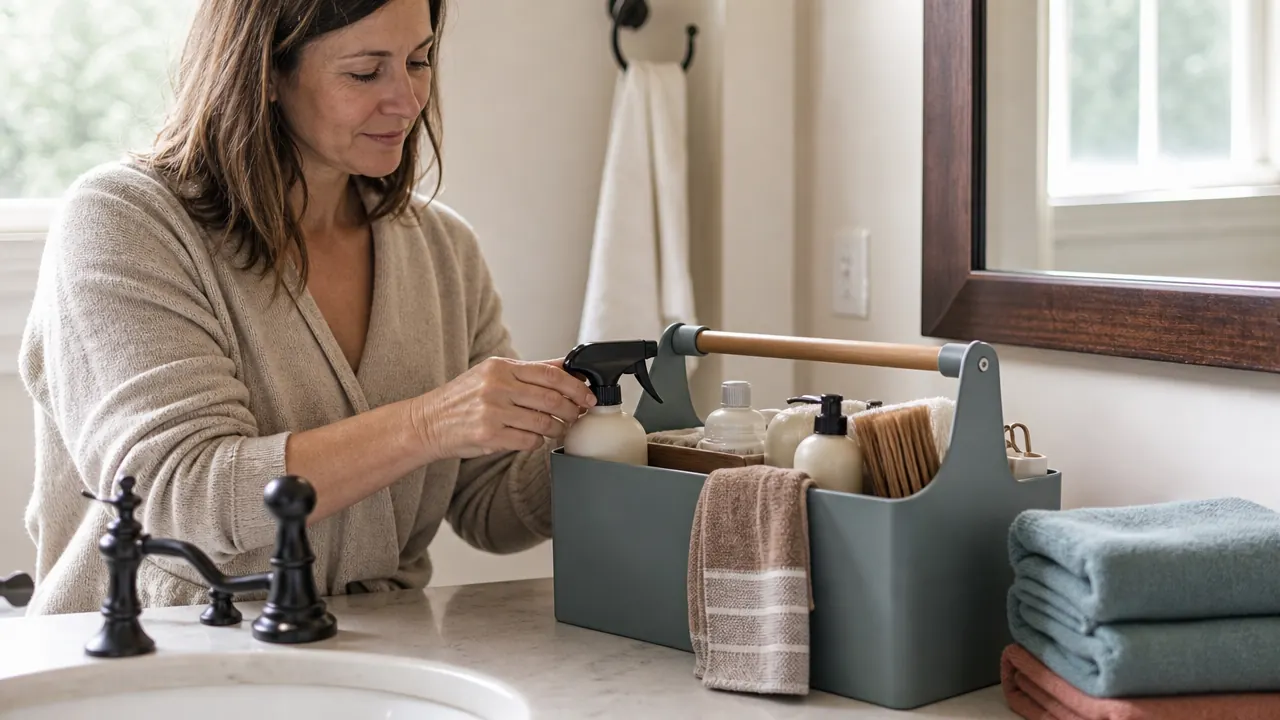
Heavy bottles go in the bottom bucket area. My caddy has a deep lower basin and a divided upper tray, so I put the bulkier spray bottles down low where they won't tip the whole thing over, and I use the top tray for smaller items like the scrub brush, a roll of trash bags, and rubber gloves. The handle sits high enough that I can carry it fully loaded without my knuckles scraping the countertop, which matters more than it sounds like it would after the third trip up the stairs.
Test the balance before you commit to a layout. My first attempt had all the weight on one side and the caddy leaned like it was trying to escape my hand halfway down the hall. I moved the heavier bottles toward the center and the handle stopped digging into my palm. If you're carrying it one-handed while holding a laundry basket in the other, which happens more often in my house than I'd like to admit, balance stops being a nice-to-have and becomes the whole point.
Keep anything you reach for constantly, like your microfiber cloths, in the most accessible slot. I keep mine tucked in the side pocket so I'm not digging past bottles every time I need to wipe a counter. Rubber gloves go clipped over the edge of the tray rather than loose at the bottom, because loose gloves have a way of ending up wet and wedged under a spray bottle by the second room.
Step 5: Build a five-minute weekly reset
Every Sunday night, I do a five-minute reset. I wipe down the caddy itself, since it picks up drips and dust just like everything else in the house, check for anything running low, and set it back on its spot on the laundry room shelf. This is the step that keeps the whole system from sliding back into chaos by week three, which is exactly what happened to my old bucket system the first two times I tried something similar.
I also do a quick restock check against my list of nineteen core items. If something's under a quarter full, it goes on the grocery list right then instead of getting discovered mid-clean on a Saturday morning, which used to send me on an emergency Target run at least once a month. The whole reset takes less time than it takes to load the dishwasher, and it's the single habit that made this system stick past the first excited week, not the caddy itself.
The caddy didn't just organize my supplies. It cut my actual cleaning time by almost half, because I stopped walking back and forth for things I already owned.
What Else Helps
A few small additions made the system stick for good. I added a cheap tension rod under the kitchen sink so the caddy has a dedicated home instead of sliding around every time someone opens the cabinet to grab the trash can liners. I also keep a laminated index card taped inside a cabinet door listing my nineteen core products, so restocking is a glance instead of a guessing game standing in the cleaning aisle trying to remember what I actually own.
I stopped buying specialty cleaners for every single surface. Once I trimmed down to four core products, the caddy stayed light enough that my ten-year-old can carry it without complaining, which means chore day is no longer a one-woman show. And if you're outfitting more than one caddy, one for upstairs and one for downstairs, buy the same model twice. Mismatched caddies mean mismatched habits, and mine only stuck once every part of the house used the exact same setup, down to the same JiatuA tray layout in each one.
One last thing worth saying plainly. This whole system only works if the caddy is easier to grab than not grabbing it at all. If it lives on a top shelf you need a step stool to reach, or it's crammed behind the vacuum where you have to dig it out, you'll drift right back to bottles scattered across three rooms within a month. Give it the most convenient spot in your house, even if that means moving something else to make room. Mine sits at waist height on that tension rod shelf, and that alone is probably half the reason this system has outlasted every organizing system I've tried before it.
Ready to carry your supplies in one trip instead of three
This is the caddy I've used every weekend for the past several months, divided tray, sturdy handle, and enough room for the nineteen products that actually matter. See today's price on Amazon.
Amazon Check Today's Price on Amazon →